Your Smile, Reimagined: How Your Moorpark Cosmetic Dentist Can Transform More Than Your Teeth
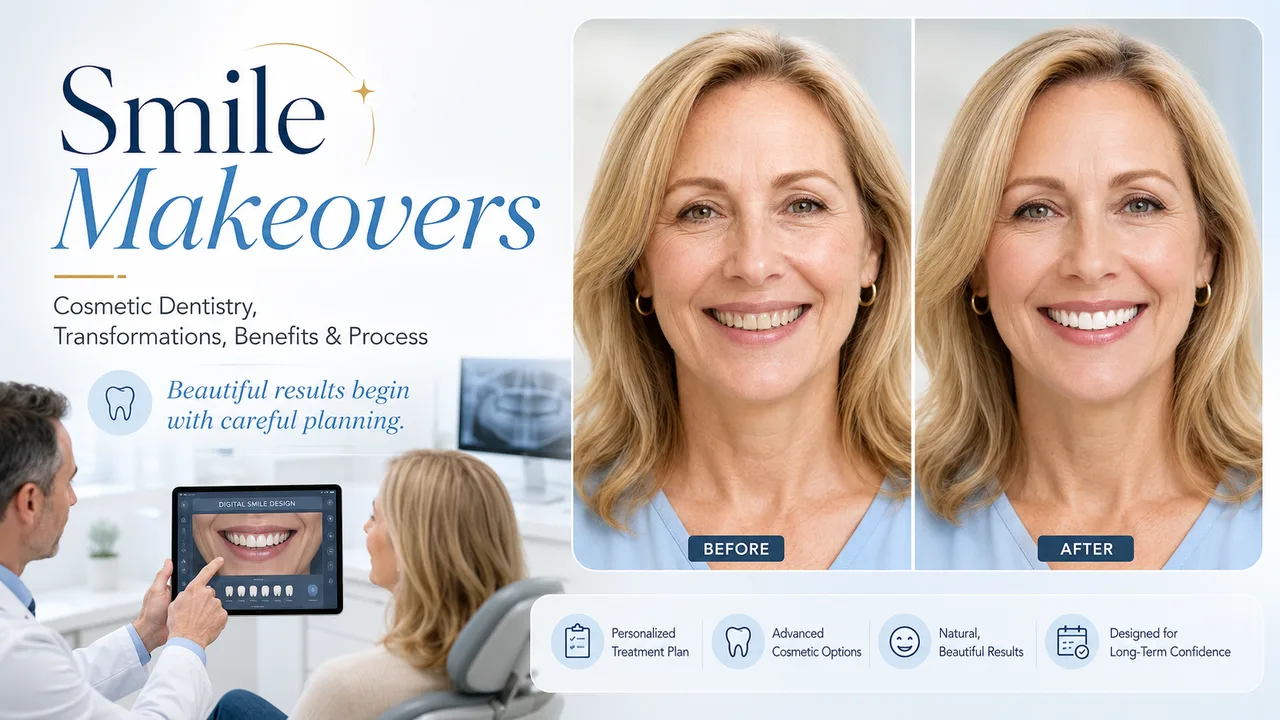
Learn about smile Makeovers and Cosmetic Dentistry in Moorpark with practical guidance from Smiles of Moorpark.
A smile makeover is about much more than making teeth look “perfect.” It is about creating a smile that feels natural, complements your face, reflects your personality, and gives you the confidence to smile without thinking twice.
For some people, cosmetic dentistry means whitening teeth that have become darker over the years. For others, it may involve repairing worn or chipped teeth, closing spaces, straightening crowded teeth, replacing missing teeth, or completely redesigning a smile they have felt self-conscious about for decades.
The exciting part is that modern cosmetic dentistry offers more options than ever before. But the most important part of a successful smile transformation happens before any treatment begins: careful planning.
What Is a Smile Makeover?
A smile makeover is a personalized combination of dental treatments designed to improve the appearance—and often the function—of your smile.
There is no single formula. Your treatment might be as simple as professional whitening and a little cosmetic bonding. Another patient may benefit from Invisalign, veneers, crowns, implants, gum contouring, or a combination of several treatments.
Some of the most common concerns we hear include:
- Teeth that have become yellow, gray, or stained
- Chipped or cracked teeth
- Worn or shortened teeth
- Gaps between teeth
- Crowded or crooked teeth
- Uneven tooth shapes or sizes
- An asymmetrical smile
- Old fillings or crowns that no longer look natural
- Missing teeth
- A smile that shows too much or too little tooth
- Teeth that do not feel like they match the way you see yourself
The goal is not to give everyone the same bright-white, perfectly identical teeth. In fact, the best cosmetic dentistry often goes unnoticed because it looks like it has always belonged there.
Why People Choose Cosmetic Dentistry
Many people live with something they dislike about their smile for years.
They may cover their mouth when they laugh. They smile with their lips closed in photographs. They avoid certain angles on video calls. Some become so accustomed to hiding their teeth that they don't realize how much it affects them.
Then something changes.
An upcoming wedding, reunion, anniversary, career change, or milestone birthday may be on the horizon. Sometimes patients reach a point where they decide, “I’ve thought about this long enough.”
A smile transformation can have benefits far beyond appearance. Patients often tell us they feel more comfortable smiling in photographs, meeting new people, speaking in public, or simply laughing without holding back. Many patients also share that they feel more confident at work, on job interviews, or on dates.
Cosmetic dental treatment can also improve function. Restoring worn or broken teeth may improve the bite. Replacing missing teeth can make eating easier. Straightening crowded teeth can sometimes make them easier to clean. And, restoring worn, shortened teeth may even smooth the lines from the nose to the corners of the mouth and marionette lines, giving patients a much more youthful appearance.
The best smile makeovers bring together beauty, health, comfort, and function.
Planning Is the Most Important Part of a Smile Makeover
It is tempting to think that cosmetic dentistry begins with choosing veneers, whitening, or another procedure.
It actually begins with a conversation. You may have been thinking about how you’d want your smile to look after your smile makeover. It’s the dentist’s job to spend time with you during your initial cosmetic consultation to see your vision.
Before changing a smile, your dentist should understand what you want to change.
What bothers you most?
Do you want a dramatic transformation or something extremely subtle?
Do you like very white teeth, or would you prefer a softer, more natural shade?
Do you want slightly longer teeth? More symmetrical? Straighter? Fuller?
Just as importantly, your dentist needs to understand the health and structure underneath the smile.
A beautiful result that ignores the bite, gums, bone, tooth position, or existing dental problems may not remain beautiful for very long.
That is why comprehensive planning may include photographs, digital scans, X-rays, an evaluation of the gums and supporting bone, an examination of the bite, and a careful assessment of existing dental work.
Your dentist may also evaluate your facial proportions, lip position, smile line, tooth length, tooth width, and how much tooth shows when you smile and speak.
These details matter tremendously.
A millimeter can make a surprising difference in cosmetic dentistry.
Seeing Your New Smile Before Treatment Begins
One of the most exciting advances in cosmetic dentistry is the ability to preview possibilities before committing to major treatment.
Digital smile design, AI-assisted smile simulations, photographs, digital scans, wax-ups, and temporary mock-ups can help patients visualize how different changes might look.
This can completely change the consultation.
Instead of trying to imagine what “slightly longer teeth” or “a fuller smile” might mean, you can actually see a representation of the proposed result.
It also allows you to participate in the design.
You may discover that you prefer a slightly softer tooth shape. Perhaps you want less change than you initially expected—or more.
This planning process helps the dentist and patient arrive at the same destination before treatment starts.
Which Treatments Can Be Part of a Smile Makeover?
A smile makeover may involve one treatment or several.
Professional teeth whitening can brighten a smile and is sometimes the only improvement needed.
Cosmetic bonding uses tooth-colored material to repair small chips, reshape teeth, or close minor spaces.
Porcelain veneers can transform the color, shape, size, and proportions of visible teeth while creating a highly natural appearance.
Invisalign or clear aligner therapy may straighten teeth and improve their position before cosmetic restorations are considered.
Crowns can restore teeth that are heavily filled, fractured, worn, or structurally weakened while also improving appearance.
Dental implants can replace missing teeth and restore both the smile and chewing function.
Gum contouring may improve tooth proportions when excessive or uneven gum tissue affects the smile.
Often, the most conservative plan combines treatments. For example, rather than placing veneers on every visible tooth, orthodontics might first improve tooth position, whitening may improve the overall color, and only a few teeth may ultimately require restorations.
That is another reason planning matters: the best treatment is not necessarily the most treatment.
What Does the Smile Makeover Process Look Like?
Every case is different, but most cosmetic transformations follow a similar path.
First comes the consultation. This is where you discuss what you like, what you do not like, and what you hope your smile could become.
Next comes the examination and diagnostic process. Your dentist evaluates the health of your teeth and gums and gathers the photographs, scans, X-rays, or other information needed to create a predictable plan.
Then the smile is designed.
You may review photographs, digital simulations, models, or mock-ups and discuss tooth shape, shade, proportions, and treatment options.
Only after the destination is clear should treatment begin.
We can complete some transformations quickly. Others may take several months, particularly when orthodontics, implants, gum treatment, or healing time is involved.
Your dentist should explain the timeline before you begin so you understand each stage.
Cosmetic Dentistry Should Still Look Like You
One of the biggest misconceptions about cosmetic dentistry is that a smile makeover means extremely white, perfectly square teeth.
It does not have to.
Beautiful cosmetic dentistry means facial harmony and balance. Your dentist considers your face, age, personality, lips, skin tone, and natural tooth characteristics to propose an ideal outcome.
Sometimes tiny imperfections actually make a smile look more believable.
The goal should not be to create someone else’s smile.
It should be to create your best smile.
Is It Too Late to Change Your Smile?
Absolutely not.
Many adults assume they should have done cosmetic dentistry when they were younger. In reality, patients choose smile makeovers at virtually every stage of adulthood.
Teeth can become worn, discolored, chipped, crowded, or heavily restored over time. Dentistry has also changed dramatically, and treatments that were unavailable—or much less predictable—years ago may now provide excellent options.
If there is something about your smile you have been thinking about changing, you do not need to know which procedure you need before scheduling a consultation.
That is what the consultation is for. At Smiles of Moorpark, Dr. Roger Gershfeld will start by finding out what smile transformation you envision and what bothers you about your current smile. He will take photos and create AI-generated before-and-after images to show the potential outcome of your smile makeover. He will then propose a treatment plan to create your ideal smile, and together you and Dr. Gershfeld will decide what is right for you.
Curious about what a smile makeover can do for you? Start with the question:
“What is possible?”
A thoughtfully planned smile makeover can restore teeth, rejuvenate your appearance, and help you feel comfortable showing a smile you may have been hiding for years.
And when cosmetic dentistry is planned correctly, the transformation shouldn't just look beautiful on the day treatment is completed.
It should be a smile designed to look natural, function comfortably, and keep you smiling for years to come.
To discuss your options, schedule a consultation with our team.
Your next step
Explore treatment options or contact our team to discuss your needs.
Your next step
Questions about what’s right for you?
Bring your questions to Smiles of Moorpark. We’ll help you understand your options and plan care around your needs.